Showing posts with label activists. Show all posts
Showing posts with label activists. Show all posts
 By Nakia Brown

All Hands On Deck: We All Have A Role in the Movement for Black Lives
 Reviewed by Anonymous
on
August 30, 2015
Rating: 5
Reviewed by Anonymous
on
August 30, 2015
Rating: 5
 Reviewed by Anonymous
on
August 30, 2015
Rating: 5
Reviewed by Anonymous
on
August 30, 2015
Rating: 5
It’s Time To Unwind, Sis: Activists Must Practice Self-Care
read

At the time of Trayvon Martin’s death, I was an eighth grader on my way to high school. I first heard the news of this horrific racial injustice on the radio, and to say I was shocked is an understatement. It was my first experience with racial injustice not only in my generation, but in this era. Four years and dozens of stolen lives later, I was as emotionally drained as I had ever been. The constant fear of becoming another hashtag or developing one for someone in my inner circle paralyzed my thoughts daily. Am I next? Will I become another hashtag? How am I supposed to want to bring children into this type of environment?
It’s Time To Unwind, Sis: Activists Must Practice Self-Care
![It’s Time To Unwind, Sis: Activists Must Practice Self-Care]() Reviewed by Anonymous
on
August 25, 2015
Rating: 5
Reviewed by Anonymous
on
August 25, 2015
Rating: 5
Activist Bree Newsome Releases First Statement After Confederate Flag Takedown
read

Activist and filmmaker Bree Newsome garnered national attention when she climbed a flagpole and took down the Confederate Flag flying above the South Carolina statehouse. Newsome made the daring feat the morning of June 27, 2015. Two days later, she has made the first statement about her iconic act and subsequent arrest.
Activist Bree Newsome Releases First Statement After Confederate Flag Takedown
 Reviewed by Anonymous
on
June 29, 2015
Rating: 5
Reviewed by Anonymous
on
June 29, 2015
Rating: 5
 Reviewed by Anonymous
on
June 29, 2015
Rating: 5
Reviewed by Anonymous
on
June 29, 2015
Rating: 5
Say It Loud: 9 Black Women in the Black Power Movement Everyone Should Know
read

by Melody Blossom
This semester, I was part of a course that focused on radical women in social movements. We studied the Black Power Movement, the Black Panther Party (BPP), and the involvement of women during this time.
Say It Loud: 9 Black Women in the Black Power Movement Everyone Should Know
 Reviewed by Unknown
on
May 22, 2015
Rating: 5
Reviewed by Unknown
on
May 22, 2015
Rating: 5
Reviewed by Unknown
on
May 22, 2015
Rating: 5
10 Things Everyone Should Know About Civil Rights Heroine Diane Nash
read

Notable civil rights leader Diane Nash celebrates her 77th birthday today. Here are ten things to know about her iconic legacy.
- Diane Nash was a founding member of the Student Nonviolent Coordinating Committee (SNCC).
- Nash briefly attended Howard University and became active in the civil rights movement when she transferred to Fisk University in 1959 and experienced the Jim Crow South firsthand.
- She was inspired by the Friendship Nine, nine Black men that were arrested in Rock Hill, SC, for sitting at a whites-only lunch counter, and became leader of sit-ins in Nashville, TN.
- Nash was featured in PBS’s MAKERS, a six part documentary highlighting women’s role in shaping the country in the last 150 years.
- She was portrayed by Tessa Thompson in Ava DuVernay’s Selma. Although the film centered on Martin Luther King, Jr., “Nash was the reason he was there in the first place.”
- Her large role in organizing the Freedom Riders played an important part in getting Martin Luther King, Jr. to Montgomery, Alabama to support the Freedom Riders movement.
- Nash married fellow protester James Bevel whom she met at a Nashville sit-in. They had two children, Sherri and Douglass.
- While protesting, Nash was arrested several times. During her first pregnancy, she was sentenced to two years and half years in prison for teaching students nonviolent strategies.
- She returned to her hometown of Chicago to support and lead advocacy work in education, real estate, and fair housing. Nash received an honorary degree from Fisk University in 2009.
- Nash refused to march at the 50th anniversary of the Selma to Montgomery marches earlier this year. Former president George W. Bush attended the commemorative event and Nash chose not to participate in the march.
Happy Birthday Diane Nash!
Photo credit: WKOW
10 Things Everyone Should Know About Civil Rights Heroine Diane Nash
 Reviewed by Anonymous
on
May 15, 2015
Rating: 5
Reviewed by Anonymous
on
May 15, 2015
Rating: 5
 Reviewed by Anonymous
on
May 15, 2015
Rating: 5
Reviewed by Anonymous
on
May 15, 2015
Rating: 5
13 Quotes by Black Women on Survival and Critical Self-Preservation
read
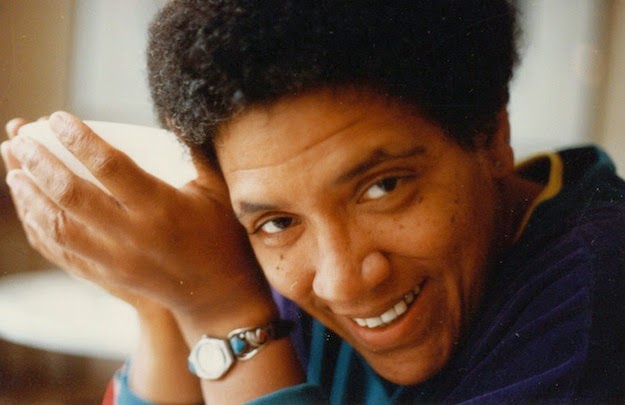
In her essay titled “Sin, Nature, and Black Women’s Bodies,” Delores S. Williams writes about “spirit breakers” or “Negro breakers,” those who were hired by slave owners to break the spirit of slaves who seemed to be too confident, too uppity, and too independent. The sole purpose of these “spirit breakers” was to put slaves in their place and to convince them that their status as mere property would never change.
13 Quotes by Black Women on Survival and Critical Self-Preservation
 Reviewed by Unknown
on
May 02, 2015
Rating: 5
Reviewed by Unknown
on
May 02, 2015
Rating: 5
Reviewed by Unknown
on
May 02, 2015
Rating: 5
18 Phenomenal African Feminists to Know and Celebrate
read

by Moiyattu Banya
What is African Feminism? Many feminists from around the world have contested the idea of whether modern conceptions of feminism are African or un-African. Indeed, feminism has existed in Africa since the times of Queen Nzinga of what is now Mozambique and Yaa Asantewaa of Ghana. These women have inspired contemporary African feminists, who have contributed significantly to feminism in various ways—whether it be through art, music, writing, policy. They have been committed to bringing the voices of African women into the spaces that they work within, and they are indeed change-makers—not only on the African continent, but also throughout the African Diaspora. As Women’s History Month comes to a close, we must take the time to celebrate the 20 African Feminists you should know.
18 Phenomenal African Feminists to Know and Celebrate
 Reviewed by Unknown
on
April 01, 2015
Rating: 5
Reviewed by Unknown
on
April 01, 2015
Rating: 5
Reviewed by Unknown
on
April 01, 2015
Rating: 5
Speak up or Pass the Mic: Why We Can’t Afford for Our Artists to be Politically Neutral
read

It’s been almost fifty years since Muhammad Ali single-handedly shifted the public conversation surrounding the Vietnam War by openly refusing to be drafted. A year later at a White House luncheon, Eartha Kitt also spoke out against the war and its systemic connection to poverty and racism, prompting backlash that kept her from working in this country for over a decade. Lena Horne, Harry Belafonte, Bob Dylan, Nina Simone, John Lennon and many other celebrities of the day were unapologetically vocal about their political views.
It was an era that changed the paradigm of American history and served as a catalyst for many artists to use their celebrity status as a platform for activism.
Artists marched, wrote, sang, performed and spoke out with a commitment that was more a way of life than a passing trend — something clearly illustrated three decades after the civil rights movement when Ruby Dee and Ossie Davis were arrested while protesting the 1999 police murder of Amadou Diallo.
In the wake of Ferguson and the overwhelming chain of tragic events that have flooded the news in recent months, there is no denying that many of the issues that past generations marched and fought for remain relevant today. We are light years away from racial or gender equality, yet many of pop culture’s most prominent figures steer clear of any cause alignment. This year’s Oscar win for the song “Glory” from the movie “Selma” is testimony that an appreciation for activism through art still exists. Further, John Legend's use of his acceptance speech airtime to state that there are more black men under correctional control today than there were under slavery in 1850, may be indicative of a changing tide in the mainstream artist community.
Fact check if you’d like; it’s true. The prison industrial complex is a thriving and well-oiled machine. The social and monetary repercussions of the African slave trade and the Native American genocide that this country was founded on continue to be the blueprint from which our society operates. The “ninety-nine percent” are largely made up of those who inherited wealth initially attributed from slave labor. They’re not rich because they are brilliant businessmen, but rather because their great-great-grandparents heavily benefited from the longest running crime against humanity and the most shameful chapter of American history. Conversely, the great-great-grandchildren of those who were enslaved are now being funneled into prisons at an alarming rate — and many as teenagers. The NAACP reports that in this country, African Americans constitute nearly 1 million of the total 2.3 million incarcerated population, and 58% of the youth admitted to state prisons. (http://www.naacp.org/pages/criminal-justice-fact-sheet). Most, if not all, are serving time for gang activity, drugs, robbery, prostitution, and other crimes derivative of poverty and the racism that begets it.
Several prominent white artists are publicly aligned with social causes, from Angelina Jolie’s advocation for Cambodian and Sudanese refugees, to Bono’s Product Red initiative for HIV/AIDS in Africa, to Sean Penn’s relief organization in Haiti. While these issues, along with police brutality, sex trafficking and the prison industrial complex directly affect black and brown people at an indisputably disproportionate rate, there are far less black mainstream artists at the forefront of such movements. On the contrary — with songs like Lil' Wayne’s chart topping “Money, Drugs, Bitches, Liquor”, it could be argued that whether intentionally or not, some black artists — specifically in mainstream hip hop — directly inform the mentality of sex, crime and materialism pervading our youth like a pied piper trailing a clear and steady path to prison. Of course, this is not always the case. One hip hop artist who has taken a notably different route is J. Cole, whose emotional performance on the Tonight Show made headlines in the aftermath of the murders of Mike Brown and Eric Garner. The Roc Nation artist has been vocal about his political stance in both his lyrics and his actions: he traveled to Ferguson to be in solidarity and participate in the peaceful protests. Others like Talib Kweli, Bahamadia, and Pharoahe Monch have long been outspoken about political issues, but such “conscious” rappers don’t get nearly as much airtime as their mainstream counterparts.
Gina Loring holds a BA from Spelman College and an MFA from Antioch University Los Angeles. She was featured on two seasons of HBO's Def Poetry, and has performed her music and poetry in over ten countries as guest artist of the American Embassy. Contact her at: www.ginaloring.com
Speak up or Pass the Mic: Why We Can’t Afford for Our Artists to be Politically Neutral
 Reviewed by For Harriet
on
March 04, 2015
Rating: 5
Reviewed by For Harriet
on
March 04, 2015
Rating: 5
Reviewed by For Harriet
on
March 04, 2015
Rating: 5
Subscribe to:
Posts
(
Atom
)